Notes on building Sprowt, agentic AI, coding harnesses, machine learning, and the systems behind them.
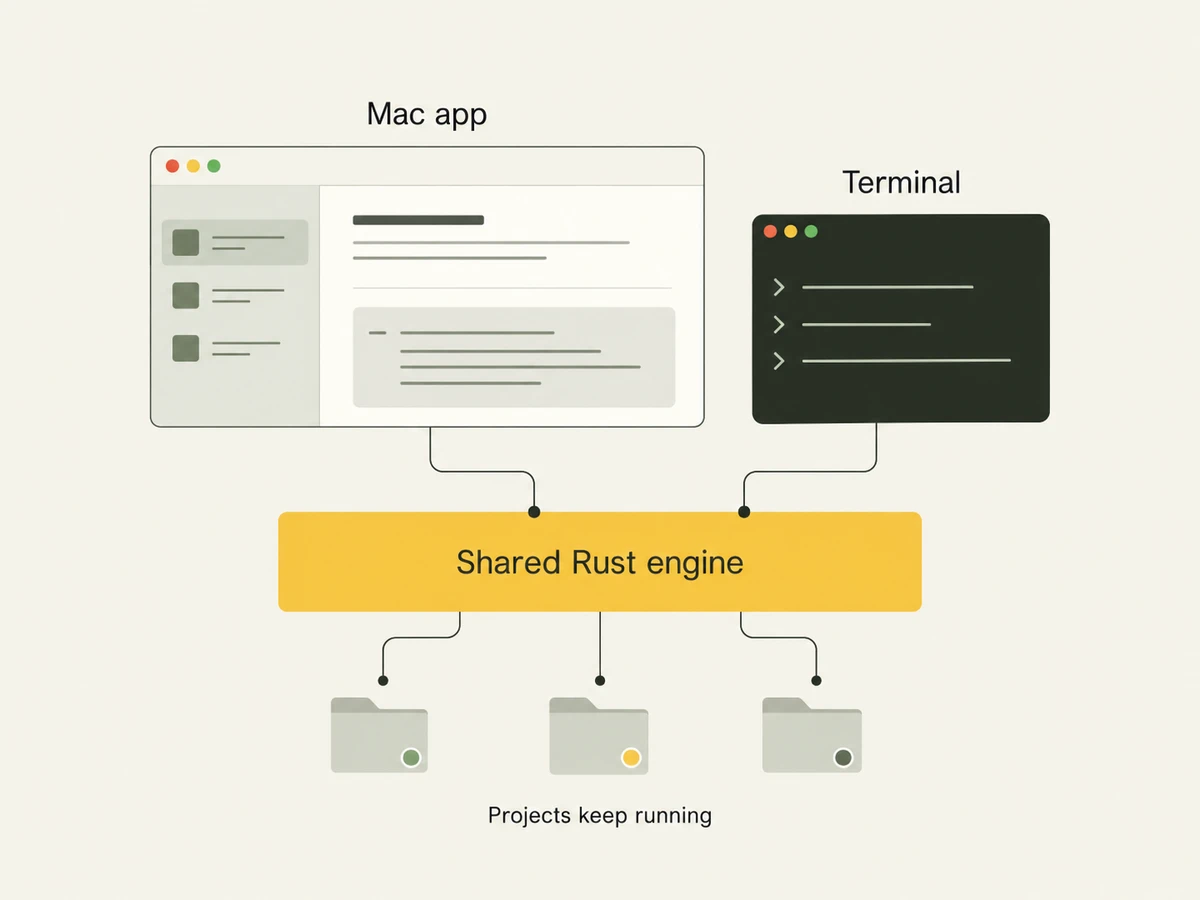
I added a native SwiftUI app to Sprowt Harness. I can follow a change from its plan to its pull request in a Mac window, with the same Rust engine and saved work as the terminal interface.
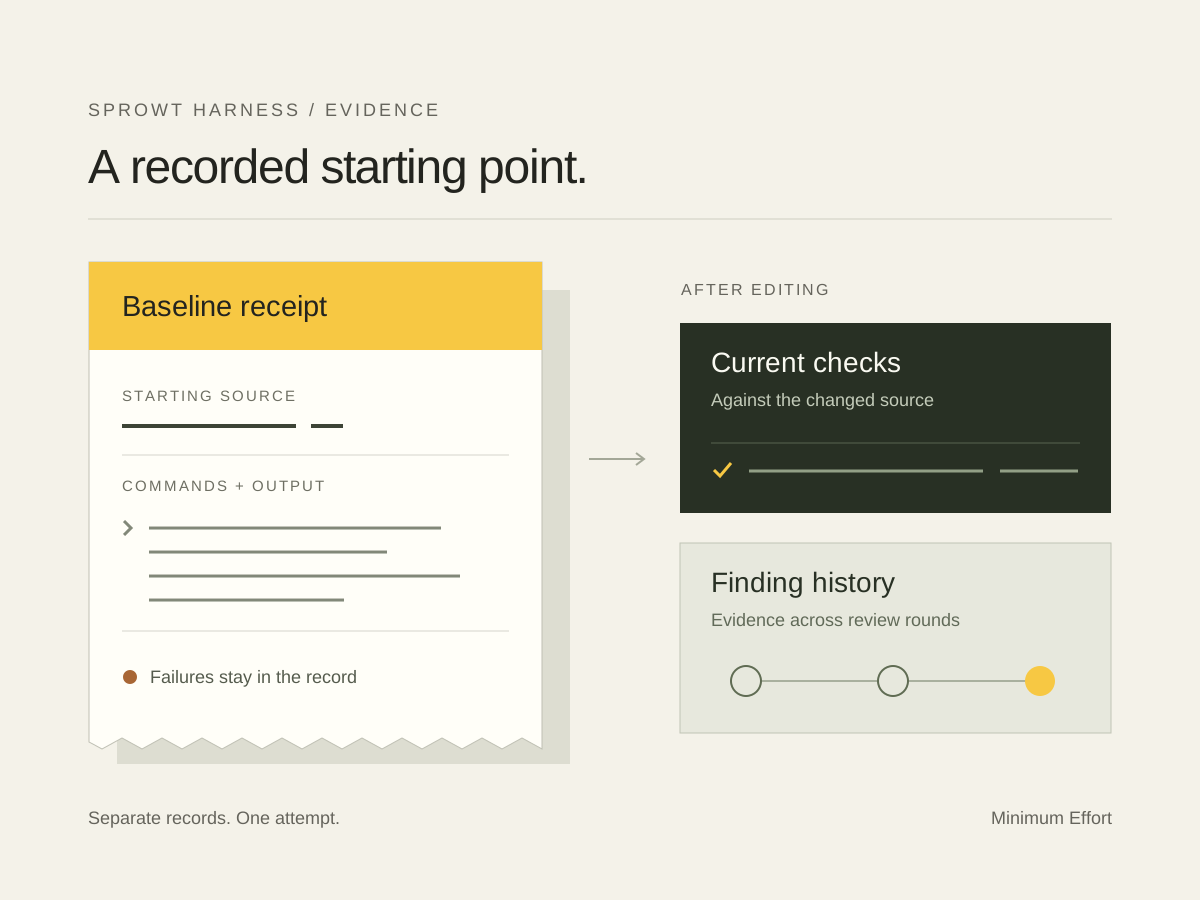
Before a worker edits anything, Sprowt Harness can now prepare its environment, check that the required tools work and record the baseline results against the starting source. Those results stay attached to the attempt, including failures.
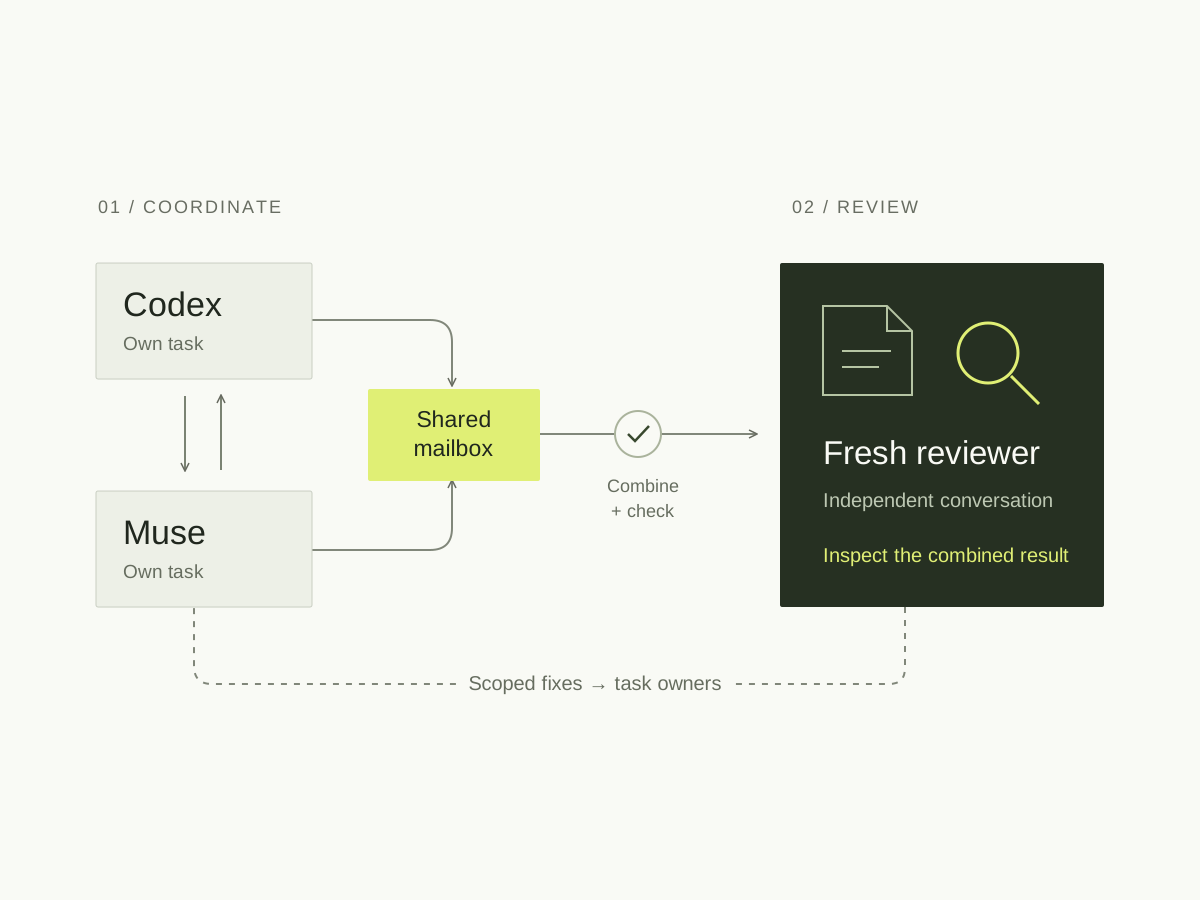
Codex and Muse can now share a codemod, exchange questions and return failed checks to their owners. A fresh reviewer can inspect the combined result and request scoped fixes.
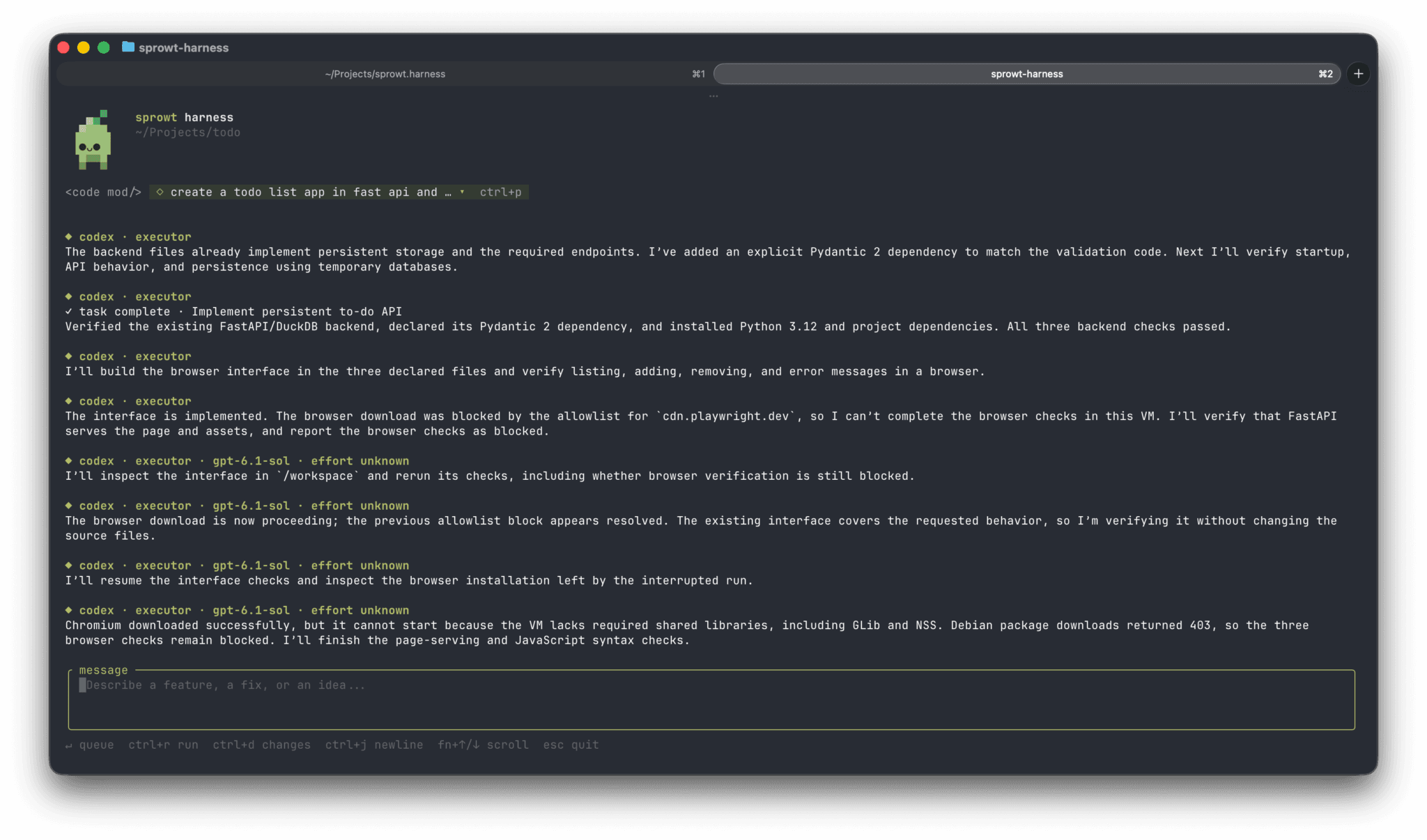
Two Codex workers can now work on the same change, with separate task worktrees and checks against the combined result. Ongoing codemods can also catch up when another PR merges.
I’ve added pull requests to Sprowt Harness, with another round of edits in the same environment and a way to put unfinished work away.
Saved plans, local Linux VMs and independent checks. Sprowt Harness can now work on a copy of a project and bring back changes for review.
Designing Sprowt Harness: parallel coding agents, local sandboxes and shared context. Explore the proposed architecture, and why I want to build it.
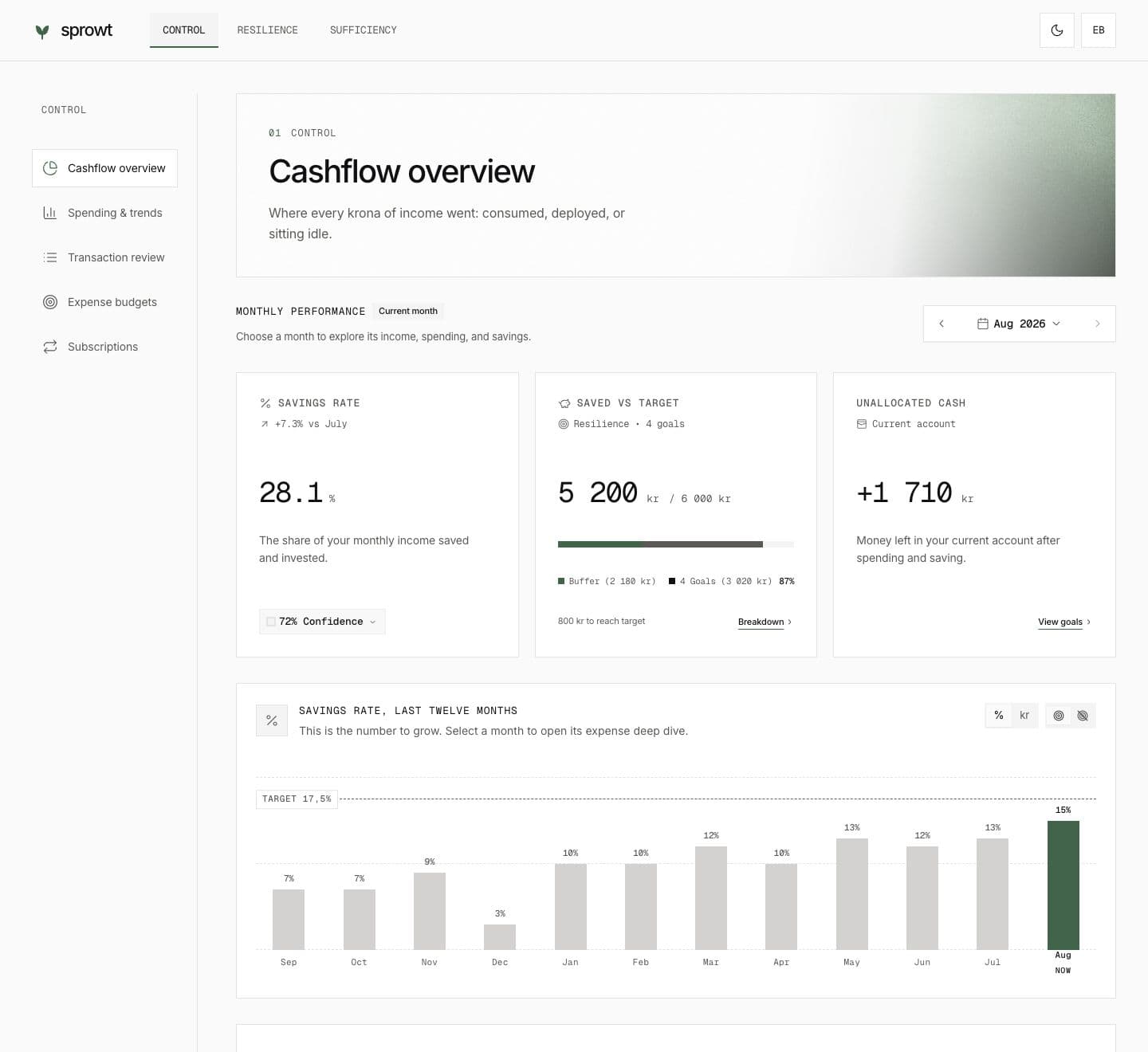
A first look at Sprowt: a clearer way to understand money, the questions shaping the product, and what is still a prototype.